
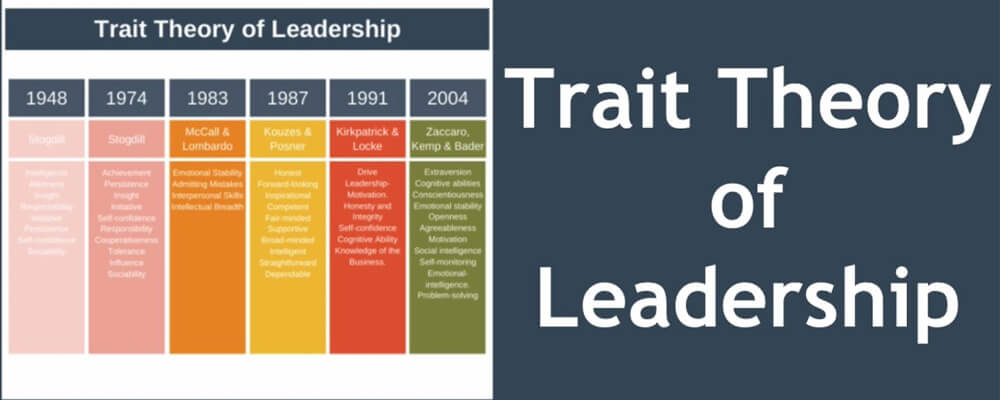

Leadership has long been recognized as one of the most important factors influencing organizational success. Among the earliest approaches to understanding leadership is the Trait Theory of Leadership, which suggests that effective leaders possess certain personal qualities and characteristics that distinguish them from others.
Trait Theory attempts to identify the physical, intellectual, emotional, and personality traits associated with successful leadership. Although modern leadership research recognizes that leadership also depends on behavior and situational factors, Trait Theory remains an important foundation for understanding leadership effectiveness and leadership development.
This article explains the concept of Trait Theory of Leadership, its major characteristics, advantages, criticisms, and relevance in modern organizations.
Leadership is a key factor in understanding group behavior. Leaders provide direction and guidance to achieve goals. Understanding the traits and behaviors of effective leaders helps organizations improve performance. One approach to studying leadership is through trait theories, which focus on the personal characteristics that distinguish leaders from followers.
Why Trait Theory of Leadership is Important
Trait Theory provides one of the earliest systematic approaches to understanding leadership by identifying the qualities commonly associated with successful leaders. It helps organizations recognize leadership potential, design leadership development programs, and understand the personal characteristics that contribute to effective decision-making and employee motivation.
Although leadership effectiveness depends on multiple factors, understanding leadership traits remains valuable for managers, HR professionals, and students studying Organizational Behavior and Management.
Common Leadership Traits Identified by Trait Theory
| Leadership Trait | Importance |
|---|---|
| Integrity | Builds trust and credibility |
| Self-confidence | Supports effective decision-making |
| Intelligence | Improves problem-solving ability |
| Emotional Stability | Maintains composure under pressure |
| Communication Skills | Strengthens employee relationships |
| Initiative | Encourages innovation and action |
| Determination | Supports goal achievement |
The Trait Theories of Leadership
Trait theories identify personal traits and qualities that differentiate effective leaders from ineffective ones.
- Leaders have certain tendencies to think, feel, and act in particular ways
- Research has identified traits that correlate strongly with leadership effectiveness based on nearly 300 studies
Common Leadership Traits
Some traits consistently linked to effective leadership include:
- Task-relevant knowledge
- Intelligence
- Self-confidence
- Dominance
- Tolerance for stress
- High activity or energy levels
- Emotional maturity
- Integrity and honesty
Note: While understanding these traits is helpful, the trait approach has limitations. It cannot explain why some people with these traits fail as leaders, or why others without these traits succeed.
Limitations of the Trait Approach
- Lack of universal traits – No single set of traits guarantees leadership in all situations
- Situational influence – Traits predict behavior better in “weak” situations (unclear norms) than in “strong” situations (clear expectations and strong norms)
- Cause vs effect – It is unclear whether traits cause leadership or result from it
- Predicting effectiveness – Traits are better at predicting who becomes a leader than who is an effective leader
Trait Theory vs Behavioral Theory of Leadership
| Trait Theory | Behavioral Theory |
|---|---|
| Focuses on personal characteristics | Focuses on leader behavior |
| Suggests leaders possess natural qualities | Suggests leadership behaviors can be learned |
| Emphasizes inherited traits | Emphasizes leadership development |
| Explains who leaders are | Explains what leaders do |
Key Leadership Traits Differentiating Leaders from Non-Leaders
Research has identified six traits that distinguish leaders from non-leaders:
- Desire to lead
- Ambition and energy
- Self-confidence
- Honesty and integrity
- Job-relevant knowledge
- Intelligence
Additional insight:
People who are high self-monitors are more likely to emerge as leaders because they adapt their behavior to social cues.
See Also: Traits of Leadership
Leadership Traits and Organizational Benefits
| Leadership Trait | Organizational Benefit |
|---|---|
| Integrity | Greater employee trust |
| Communication | Better teamwork |
| Confidence | Stronger decision-making |
| Intelligence | Improved problem-solving |
| Initiative | Increased innovation |
| Determination | Higher organizational performance |
The Behavioral Approach to Leadership
While trait theories focus on “who leaders are,” behavioral theories focus on “what leaders do.” Behavioral approaches identify actions that contribute to effective leadership.
Consideration and Initiating Structure
Researchers from Ohio State University measured over 1,800 leader behaviors and identified two key categories:
- Consideration – Shows respect, trust, and value for relationships with followers
- Treats employees as equals
- Shows concern for well-being
- Values employee opinions
- Provides clear explanations
- Initiating Structure – Focuses on task completion and organization
- Plans and assigns tasks
- Sets goals and expectations
- Guides followers on how to achieve objectives
Both behaviors are complementary but independent. Effective leaders can engage in both.
Leader Reward and Punishing Behavior
Leaders influence employee behavior through rewards and punishments:
- Reward behavior: Positively reinforces desirable behavior
- Examples: praise, promotion, pay raise
- Encourages high performance
- Punishing behavior: Responds negatively to undesirable behavior
- Examples: reprimands, penalties
- Should be used cautiously to avoid resentmentResearch shows reinforcement is generally more effective than punishment.
Comparing Trait and Behavioral Approaches
Trait theory assumes that leadership is fundamentally innate, meaning that the right leader must be selected based on personal qualities. Behavioral theory, on the other hand, assumes that leadership skills can be learned and trained, suggesting that effective leaders can be developed through proper guidance and programs.
While trait theory focuses on identifying personal qualities linked to leadership potential, behavioral theory emphasizes the actions of leaders and how those actions influence follower performance and organizational outcomes. Both approaches offer valuable insights, with traits indicating potential and behaviors showing practical effectiveness.
Practical Example of Trait Theory
Suppose a project manager consistently demonstrates confidence, integrity, effective communication, and sound decision-making while leading a cross-functional project.
During unexpected project delays, the manager remains calm, motivates employees, communicates transparently with stakeholders, and develops practical solutions to keep the project on schedule.
Employees trust the manager’s leadership because of these personal qualities rather than relying solely on formal authority. This example illustrates how leadership traits can positively influence employee motivation, teamwork, and organizational performance.
Advantages and Limitations of Trait Theory
| Advantages | Limitations |
|---|---|
| Easy to understand | Ignores situational factors |
| Identifies leadership qualities | Does not explain leadership development completely |
| Supports leadership selection | No universal list of leadership traits |
| Useful for leadership development | Overemphasizes inherited characteristics |
| Forms the foundation of leadership research | Limited predictive ability in all situations |
Despite its historical importance, Trait Theory has several limitations. It does not fully explain why individuals with similar traits may perform differently in different situations, nor does it consider organizational culture, employee expectations, or changing business environments.
Modern leadership approaches therefore combine Trait Theory with behavioral, contingency, and transformational leadership theories to provide a more comprehensive understanding of leadership effectiveness.
Frequently Asked Questions (FAQs)
What is Trait Theory of Leadership?
Trait Theory suggests that successful leaders possess specific personal characteristics and qualities that distinguish them from non-leaders.
What are the major leadership traits?
Common leadership traits include integrity, intelligence, self-confidence, communication skills, initiative, emotional stability, and determination.
Why is Trait Theory important?
It helps organizations identify leadership potential, develop future leaders, and understand the characteristics associated with effective leadership.
What is the difference between Trait Theory and Behavioral Theory?
Trait Theory focuses on who leaders are, while Behavioral Theory focuses on what leaders do and how leadership behaviors can be developed.
What are the limitations of Trait Theory?
Trait Theory does not fully consider situational influences, organizational culture, or the possibility that leadership skills can be developed through experience and training.
Conclusion
Trait Theory of Leadership remains one of the earliest and most influential approaches to understanding effective leadership. By identifying personal qualities such as integrity, confidence, intelligence, communication skills, and determination, the theory provides valuable insights into the characteristics commonly associated with successful leaders.
Although modern leadership research recognizes that leadership effectiveness also depends on behavior, organizational context, and situational factors, Trait Theory continues to play an important role in leadership selection, development, and organizational management. Understanding leadership traits helps organizations identify potential leaders, strengthen leadership capabilities, and build effective management teams capable of achieving long-term organizational success.
References: