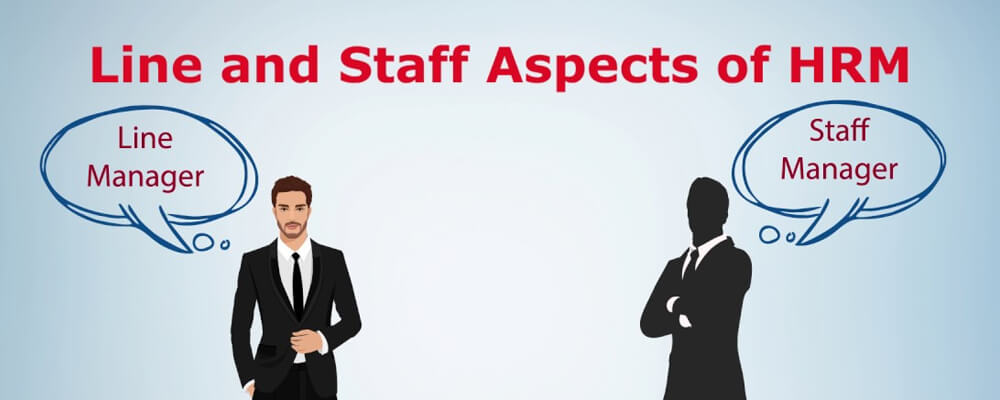

Human Resource Management (HRM) involves a wide range of activities such as recruiting, interviewing, selecting, training, promotion, and employee compensation. These activities fall under the line and staff aspects of HRM, which define how authority and responsibilities are distributed within an organization.
Understanding the distinction between line and staff roles helps ensure smooth coordination, effective decision-making, and achievement of organizational goals.
Why Line and Staff Aspects of HRM are Important
Human Resource Management is not solely the responsibility of the HR department. While HR professionals develop policies, provide guidance, and support employee-related activities, line managers play an equally important role by implementing HR practices within their departments.
Understanding the line and staff aspects of HRM helps organizations establish clear responsibilities, improve communication, and ensure that human resource policies are applied consistently. Effective cooperation between line managers and HR professionals contributes to better employee performance, higher productivity, and improved organizational effectiveness.
Differences Between Line and Staff Authority
| Line Authority | Staff Authority |
|---|---|
| Directly responsible for achieving organizational objectives | Provides advice and support to line managers |
| Has decision-making authority over employees | Offers recommendations and specialized expertise |
| Responsible for daily operations | Responsible for HR policies and guidance |
| Supervises employees directly | Supports managers in employee-related matters |
Line and Staff Aspect of HRM
1. Authority
Authority is the right to make decisions, give orders, and direct the work of others.
It is attached to a managerial position and allows managers to expect compliance from employees. Authority is linked to the role, not the individual, and remains with the position even when a person leaves it.
Early management thinkers considered authority as the foundation that holds the organization together, ensuring proper coordination and control.
2. Types of Authority
1. Line Authority
Line authority refers to the direct authority a manager has over subordinates.
It flows from top to bottom in the organizational hierarchy. Line managers make decisions and direct employees without needing to consult others. Their primary role is to achieve organizational objectives.
2. Staff Authority
Staff authority belongs to staff managers who provide advice, support, and assistance to line managers. As organizations grow in size and complexity, line managers rely on staff specialists for expertise and guidance.
3. Functional Authority
Functional authority refers to the authority given to a manager to control specific activities across departments.
HR managers often exercise functional authority by coordinating personnel activities and ensuring policies are followed.
Line vs Staff Authority
1. Role of Line Managers
Line managers are responsible for achieving organizational goals and directly supervising employees. They have decision-making authority and are accountable for performance outcomes.
2. Role of Staff Managers
Staff managers assist line managers by providing expert advice and support. They do not have direct authority over employees but influence decisions through their knowledge and recommendations.
Cooperative Line and Staff HR Management
1. Recruitment and Selection Process
Line managers identify the qualifications required for a job.
HR staff then handle tasks such as sourcing candidates, conducting initial interviews, and administering tests. Final selection is usually made by the line manager.
2. Shared Responsibility
Effective HR management requires cooperation between line and staff managers. Both work together to ensure that the right employees are hired and managed effectively.
Responsibilities of Line Managers
1. Placement
Assigning employees to suitable roles.
2. Training
Ensuring employees receive necessary training.
3. Orientation
Helping new employees adjust to the organization.
4. Improving Job Performance
Monitoring and enhancing employee performance.
5. Interpreting Policies
Communicating organizational policies and procedures.
6. Gaining Cooperation
Encouraging teamwork and collaboration.
7. Controlling Labor Costs
Managing workforce expenses efficiently.
8. Maintaining Morale
Creating a positive work environment.
9. Developing Employees
Supporting employee growth and development.
10. Ensuring Health and Safety
Protecting employees’ physical well-being.
Responsibilities of Staff Managers
1. Advisory Role
Providing guidance and expertise to line managers.
2. Supporting HR Functions
Assisting in hiring, training, evaluation, and employee development.
3. Managing HR Programs
Handling compensation, benefits, and employee relations programs.
4. Coordination
Ensuring HR policies are implemented consistently across the organization.
Role of Human Resource Manager
1. Advisory Function
HR managers primarily work in a staff capacity, supporting other managers in handling employee-related issues.
2. Coordination of HR Activities
They coordinate all HR functions to align with organizational objectives.
3. Strategic Contribution
HR managers play a strategic role by ensuring that human resources support the organization’s mission and long-term goals.
4. Workforce Planning
They analyze current and future workforce needs to ensure organizational readiness.
5. Partnership with Line Managers
HR managers collaborate with line managers to improve employee performance and organizational effectiveness.
Example of Line and Staff Functions
Suppose a manufacturing company wants to recruit additional production workers.
The Human Resource department prepares the job advertisement, screens applications, and conducts preliminary interviews. However, the production manager (a line manager) evaluates the technical skills of shortlisted candidates and makes the final hiring recommendation.
After recruitment, HR develops training policies and employee records, while the production manager supervises employees’ daily work and evaluates their job performance.
This example illustrates how line managers and HR professionals work together to achieve organizational goals.
Responsibilities of Line Managers and HR Managers
| Line Managers | HR Managers |
|---|---|
| Supervise employees | Develop HR policies |
| Assign daily work | Support recruitment activities |
| Monitor employee performance | Design training programs |
| Maintain departmental productivity | Provide HR advice and guidance |
| Recommend promotions | Ensure legal compliance |
When line managers and HR professionals work together effectively, organizations experience improved communication, faster decision-making, better employee management, and greater consistency in HR practices.
Strong cooperation also supports recruitment, performance management, employee development, and conflict resolution, leading to higher employee satisfaction and organizational performance.
Benefits and Challenges of Line and Staff Relationships
| Benefits | Challenges |
|---|---|
| Better communication | Role ambiguity |
| Improved employee management | Authority conflicts |
| Stronger HR implementation | Poor coordination |
| Faster decision-making | Communication gaps |
| Greater organizational efficiency | Resistance to HR policies |
Frequently Asked Questions (FAQs)
What are the line and staff aspects of HRM?
The line and staff aspects of HRM describe the shared responsibilities of line managers and HR professionals in managing employees and implementing human resource policies.
What is line authority?
Line authority refers to the direct authority managers have over employees to achieve organizational objectives and supervise daily operations.
What is staff authority?
Staff authority involves providing advice, support, and specialized expertise to line managers without direct operational control.
Why are line managers important in HRM?
Line managers implement HR policies, supervise employees, conduct performance evaluations, and contribute to recruitment and employee development.
How do HR managers support line managers?
HR managers provide guidance on recruitment, training, performance management, employee relations, legal compliance, and organizational policies.
Conclusion
The line and staff aspects of HRM define how authority and responsibilities are shared within an organization. Line managers focus on achieving core business objectives, while staff managers provide the expertise and support needed to accomplish those goals.
Effective cooperation between line and staff roles ensures better decision-making, improved employee management, and overall organizational success. Understanding these aspects is essential for building a strong and efficient HR system.
Read Also: Human Resource Management Environment