

The marketing mix refers to a set of controllable marketing elements that a business organization uses to generate the desired response in a target market. These elements are carefully combined and managed to influence customer demand and achieve organizational objectives.
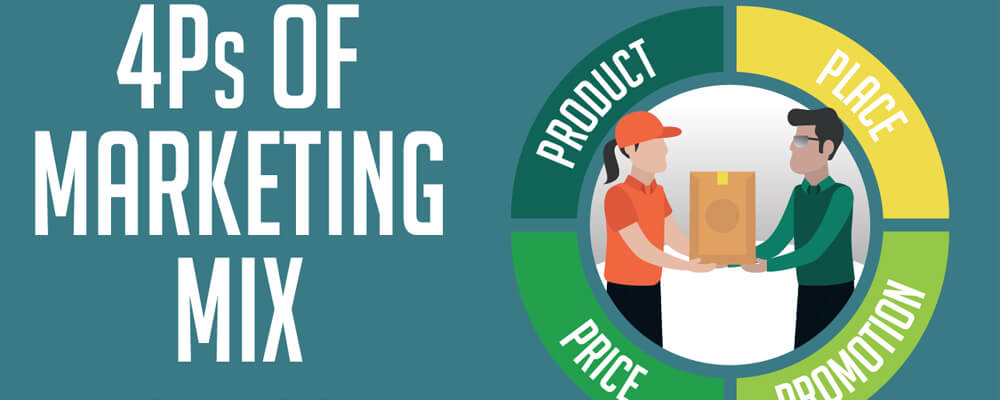
In simple terms, the marketing mix includes everything a business can do to promote its product and satisfy customer needs. Among these elements, the most widely recognized framework is the 4Ps of marketing mix, which includes Product, Price, Place, and Promotion. These four components work together to create value for customers and ensure business success.
What is Marketing Mix
The marketing mix is a combination of strategies and tools used by marketers to deliver value to customers and achieve competitive advantage. It includes all decisions related to product development, pricing, distribution, and communication.
Business organizations continuously adjust their marketing mix to respond to changing market conditions, customer preferences, and competitive pressures. A well-designed marketing mix ensures that the right product reaches the right customer at the right price and through the right channels.
Why are the 4Ps of Marketing Important?
The 4Ps of Marketing provide businesses with a practical framework for developing products and services that satisfy customer needs while achieving organizational goals. Each element of the marketing mix influences customer purchasing decisions, and together they create a coordinated marketing strategy that supports business growth and competitive advantage.
By carefully managing product features, pricing strategies, distribution channels, and promotional activities, businesses can increase customer satisfaction, strengthen brand loyalty, improve market positioning, and maximize profitability. As markets continue to evolve, the marketing mix remains one of the most valuable tools for planning and implementing successful marketing strategies.
The Four Ps of the Marketing Mix
| Marketing Mix Element | Primary Focus |
|---|---|
| Product | Satisfying customer needs through goods or services |
| Price | Determining the value customers are willing to pay |
| Place | Making products available to target customers |
| Promotion | Communicating product value and encouraging purchases |
Marketing mix includes the following basic components:
- Product
- Price
- Place (Distribution)
- Promotion
Each of these elements plays a crucial role in influencing consumer demand and organizational performance.
1. Product
Product refers to the goods or services offered by a business to satisfy customer needs and wants.
Marketers are responsible for:
- Identifying customer needs
- Understanding market demand
- Developing products that meet those needs
For example, due to smaller family sizes today, marketers may introduce products in smaller packaging or quantities to better suit consumer preferences.
Product decisions also affect other departments within the organization. For instance:
- If a product generates high demand, production teams must increase output
- If competitors introduce cheaper alternatives, marketers may require cost reduction strategies
This interaction shows that product decisions are closely linked with operations, production, and engineering functions.
Engineers and designers also contribute significantly to product development by focusing on:
- Product design
- Ergonomics
- Human factors
Organizations may introduce new product lines to expand their offerings. For example, if Product A is red, a new Product B may be introduced in green. Marketing teams then research and promote the new product line to create customer demand.
2. Price
Price refers to the amount customers must pay to obtain a product or service.
Marketers must take a proactive approach to pricing rather than simply reacting to market conditions. This involves:
- Conducting market research
- Analyzing competitor pricing
- Identifying suitable price points
When launching a new product, marketers must ensure that the price reflects the product’s value. If a higher price is charged, customers should perceive greater value in return.
Pricing decisions are influenced by various factors, including:
- Production costs
- Demand levels
- Competition
- Customer perception
Technical experts may also contribute by identifying ways to reduce production costs, allowing products to be sold at more competitive prices.
Effective pricing strategies help businesses remain competitive while maintaining profitability.
3. Place (Distribution)
Place refers to how a product is delivered to customers and made available in the market.
Even if a product is well-designed and priced correctly, it cannot succeed unless it is distributed effectively.
Marketers must decide:
- Whether to sell directly or through intermediaries
- Whether to use wholesalers, retailers, or distributors
- Whether to operate locally, nationally, or internationally
Distribution decisions also include:
- Selection of sales channels
- Logistics and transportation planning
- Warehousing and inventory management
For example, a company must decide whether to sell products through high-end stores or discount outlets. These decisions directly affect brand positioning and customer perception.
Distribution strategies also impact other departments, especially logistics and supply chain management. For instance, expanding into international markets requires changes in packaging, transportation, and storage systems.
4. Promotion
Promotion involves all activities used to communicate with customers and inform them about products.
It includes:
- Advertising
- Sales promotion
- Public relations
Sales Promotion
Sales promotions are short-term incentives designed to encourage customers to purchase products. Examples include:
- Coupons
- Discounts
- Free samples
- Contests
- Buy-one-get-one-free offers
Advertising
Advertising involves paid communication to promote a product. Common forms include:
- Television and radio commercials
- Magazine and newspaper ads
- Online advertisements
- Billboards
Repetition plays a key role in advertising effectiveness. Customers often ignore a message when they see it once, but repeated exposure increases awareness and interest.
Public Relations
Public relations focuses on building a positive image of the organization through non-paid communication.
Examples include:
- Media coverage
- News mentions
- Community involvement
Media relations are an important part of public relations, as positive news coverage helps build trust and credibility.
Promotion directly affects product demand and influences other business functions such as production and distribution.
Read More: What is Marketing
Key Marketing Decisions
| Marketing Mix Element | Examples of Decisions |
|---|---|
| Product | Design, quality, branding, packaging |
| Price | Discounts, pricing strategy, payment terms |
| Place | Distribution channels, logistics, retail locations |
| Promotion | Advertising, sales promotion, public relations, digital marketing |
Practical Example of the 4Ps of Marketing:
A coffee shop launching a new premium coffee blend applies the 4Ps by developing a high-quality product with attractive packaging, setting a competitive price based on customer expectations, making the product available through physical stores and online delivery platforms, and promoting it through social media campaigns, loyalty programs, and local advertising. By coordinating all four elements, the business creates a consistent marketing strategy that increases customer satisfaction and sales.
How the 4Ps Work Together
This is one section I strongly recommend because many articles explain the four Ps separately but fail to show how they function as an integrated strategy.
Explain that:
A successful marketing strategy requires all four elements of the marketing mix to work together. A high-quality product may fail if it is overpriced, poorly promoted, or unavailable to customers. Similarly, effective advertising cannot compensate for a product that fails to satisfy customer needs.
Businesses achieve the best results when product, price, place, and promotion are carefully coordinated to deliver value to the target market and support organizational objectives.
Functions of Marketing
Marketing performs several important functions that support business activities. These functions ensure that products move efficiently from producers to consumers.
1. Buying
This function involves purchasing raw materials for production or finished goods for resale. It ensures that customer demand is met by maintaining sufficient product availability.
2. Selling
Selling involves activities that match customer needs with products. It includes advertising, personal selling, and sales promotion.
3. Transporting
Transporting ensures that goods move from production sites to locations where customers can access them.
4. Storing
Warehousing is used to store goods until they are needed for distribution. This helps maintain a steady supply in the market.
5. Standardizing and Grading
This function ensures that products meet quality standards and are categorized based on size, weight, and other characteristics.
6. Financing
Financing provides the funds required for marketing activities such as production, promotion, and distribution. It may also include offering credit to customers and channel members.
7. Risk Taking
Marketers take risks when introducing new products, as there is always uncertainty about customer acceptance and market response.
8. Securing Marketing Information
This function involves gathering and analyzing information about customers, competitors, and market conditions.
Marketers use this information to:
- Identify customer needs
- Develop products
- Make informed decisions
After launching a product, continuous information is required to ensure that customers are aware of its availability and benefits.
Frequently Asked Questions (FAQs)
What are the 4Ps of Marketing?
The 4Ps of Marketing are Product, Price, Place, and Promotion, which together form the traditional marketing mix.
Why are the 4Ps important?
They help businesses develop coordinated marketing strategies that satisfy customer needs and achieve business objectives.
Who introduced the 4Ps of Marketing?
The 4Ps framework was developed by E. Jerome McCarthy in 1960.
What is the difference between the 4Ps and the 7Ps?
The 4Ps focus mainly on products, while the 7Ps expand the model by adding People, Process, and Physical Evidence for service marketing.
Can the 4Ps be applied to digital marketing?
Yes. Businesses adapt the 4Ps to digital channels by using e-commerce, online pricing strategies, digital distribution, and online promotional activities.
Conclusion
The 4Ps of Marketing provide businesses with a comprehensive framework for developing effective marketing strategies that create value for customers and achieve organizational goals. By carefully managing product, price, place, and promotion, organizations can respond to changing customer needs, strengthen their competitive position, and improve overall business performance.
Although marketing continues to evolve through digital transformation and changing consumer behavior, the principles of the 4Ps remain fundamental to successful marketing management. Businesses that effectively integrate all four elements into a unified strategy are better positioned to achieve sustainable growth and long-term success.
References: