
Direct marketing is an important and evolving approach in modern marketing that focuses on building direct relationships with customers. Unlike traditional marketing methods that rely on mass communication, direct marketing involves communicating directly with carefully targeted individual consumers to generate an immediate response.
This form of marketing emphasizes interaction and personalization. It allows businesses to connect with customers more effectively and measure responses quickly. Although direct marketing is not a new concept, its nature and scope have changed significantly with advancements in technology, especially with the rise of the internet and digital platforms.
What is Direct Marketing
Direct marketing refers to direct communication with specifically targeted customers to obtain an immediate response and build lasting relationships.
Traditionally, direct marketing was used by:
- Direct mail companies
- Catalog businesses
- Telemarketing firms
These organizations relied on mail and telephone communication to reach customers. However, with improvements in database technologies and the emergence of new media, direct marketing has become more advanced and efficient.
Today, direct marketing is not limited to selling products. It plays a broader role in building customer relationships and delivering personalized experiences.
Why Direct Marketing is Important
Direct marketing enables organizations to establish personalized communication with customers, build stronger relationships, increase customer engagement, and encourage repeat purchases. Because responses can be measured more accurately than many traditional promotional methods, businesses can continuously improve their marketing campaigns and maximize return on investment (ROI).
Direct marketing is particularly valuable for customer retention, lead generation, and personalized promotions.
Major Types of Direct Marketing
| Type | Purpose |
|---|---|
| Email Marketing | Personalized promotional messages |
| SMS Marketing | Time-sensitive offers and reminders |
| Direct Mail | Printed promotional materials |
| Telemarketing | Personal customer communication |
| Catalog Marketing | Product presentation |
| Social Media Direct Marketing | Personalized engagement |
| Online Advertising | Targeted customer acquisition |
Evolution of Direct Marketing
In the past, direct marketing involved collecting customer names and selling products mainly through mail or telephone. This traditional approach was effective but limited in scope.
With the advancement of technology, direct marketing has undergone a major transformation:
- Improved customer databases allow better targeting
- Digital platforms enable real-time communication
- Internet and e-commerce have created new business models
Direct marketing is now both:
- A communication tool
- A distribution channel
For many organizations, it has become a complete business model rather than just a supplementary marketing method.
Experts believe that the future of marketing will involve direct connections between businesses and customers. This shift has changed customer expectations, including:
- Faster service
- Greater convenience
- Better price comparison
- Improved customer support
New Direct Marketing Model
The new direct marketing model is driven by the internet and electronic commerce. It allows businesses to interact directly with customers without intermediaries.
Some key features of this model include:
- Direct communication through digital platforms
- Personalized offers based on customer data
- Real-time interaction and feedback
- Global reach
Many businesses now rely entirely on direct marketing as their primary approach. This model enables companies to operate more efficiently and respond quickly to customer needs.
Direct Marketing vs Mass Marketing
This comparison is frequently discussed in marketing courses.
| Direct Marketing | Mass Marketing |
|---|---|
| Personalized communication | General communication |
| Specific target audience | Broad audience |
| Highly measurable | More difficult to measure |
| Interactive | Mostly one-way communication |
| Relationship-focused | Awareness-focused |
Benefits of Direct Marketing
| Benefit | Marketing Impact |
|---|---|
| Personalized Communication | Stronger customer relationships |
| Measurable Results | Better campaign evaluation |
| Higher Customer Engagement | Improved loyalty |
| Cost Efficiency | Better marketing ROI |
| Faster Response | Increased sales opportunities |
| Customer Data Collection | Improved future marketing decisions |
Direct marketing offers significant advantages to both buyers and sellers. These benefits have contributed to its rapid growth in recent years.
Benefits to Buyers
Customers benefit from direct marketing in several ways:
- Privacy and Ease: Purchases can be made privately without visiting physical stores
- Convenience: Customers can shop anytime and from anywhere
- Access to Information: Consumers can compare products, prices, and features easily
- Wide Selection: A larger variety of products is available online
- Interactivity: Online platforms allow immediate responses and engagement
Direct marketing empowers customers by giving them control over their buying decisions and providing them with detailed information.
Benefits to Sellers
Businesses also gain several advantages from direct marketing:
- Customer Relationship Building: Direct communication helps create long-term relationships
- Cost Efficiency: Reduces costs associated with traditional advertising and distribution
- Speed and Flexibility: Marketing campaigns can be launched and adjusted quickly
- Personalization: Messages can be tailored to individual customers
- Global Reach: The internet allows businesses to reach customers worldwide
Because of its one-to-one nature, direct marketing is highly effective in creating continuous engagement with customers.
Growth of Direct Marketing
Direct marketing has experienced rapid growth over the years:
- Traditional direct marketing channels have grown steadily at around 8% annually
- Online marketing has grown significantly faster, with approximately 60% annual growth in recent years
This growth reflects the increasing importance of digital platforms and the shift toward personalized marketing strategies.
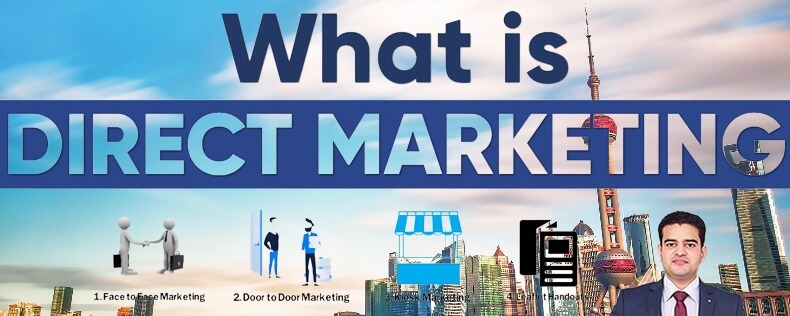
Forms of Direct Marketing
There are several forms of direct marketing used by businesses:
- Face-to-face selling
- Telemarketing
- Direct mail marketing
- Catalog marketing
- Direct response television marketing
- Kiosk marketing
- Online marketing and electronic commerce
Each form has its own advantages and is used depending on the target audience and business objectives.
Customer Databases and Direct Marketing
A key component of direct marketing is the use of customer databases. A customer database is a structured collection of detailed information about individual customers or prospects.
This information may include:
- Demographic data
- Geographic data
- Behavioral data
- Psychographic data
Database marketing involves collecting, maintaining, and using this data to communicate effectively with customers.
Uses of Customer Databases
Businesses use customer databases in several ways:
- Identifying potential customers
- Building and strengthening customer loyalty
- Targeting specific customers with relevant offers
- Reactivating inactive customers
Database marketing is widely used in service industries and business-to-business markets. However, it requires investment in technology and data management systems.
Integrated Direct Marketing
In many organizations, direct marketing efforts are not fully coordinated with other marketing activities. This lack of integration can reduce effectiveness.
Integrated direct marketing is a more powerful approach that involves:
- Coordinating multiple marketing channels
- Using multi-stage campaigns
- Delivering consistent messages across platforms
This approach ensures that all marketing efforts work together to achieve better results and stronger customer engagement.
Example of Direct Marketing
Suppose an online clothing retailer maintains a customer email database.
Customers who previously purchased winter jackets receive personalized emails recommending matching accessories and offering a limited-time discount. Customers who abandoned their shopping carts receive reminder emails encouraging them to complete their purchases. The retailer tracks email open rates, click-through rates, and sales conversions to measure campaign effectiveness.
This example demonstrates how direct marketing creates personalized customer experiences while generating measurable business results.
Challenges of Direct Marketing
To keep the article balanced, discuss common challenges such as:
- Privacy concerns
- Data protection regulations
- Email fatigue
- Spam filters
- Maintaining accurate customer databases
- Personalization at scale
- Customer trust
Explain that businesses should obtain consent, protect customer information, and provide clear options for customers to manage communication preferences.
Frequently Asked Questions (FAQs)
What is direct marketing?
Direct marketing is a promotional strategy in which businesses communicate directly with individual customers through personalized messages to encourage purchases and build long-term relationships.
What are the major types of direct marketing?
Major types include email marketing, SMS marketing, direct mail, telemarketing, catalog marketing, social media marketing, and online advertising.
Why is direct marketing important?
It enables personalized communication, measurable campaign performance, customer relationship building, and higher marketing efficiency.
What is the difference between direct marketing and mass marketing?
Direct marketing targets specific individuals with personalized messages, while mass marketing communicates the same message to a broad audience.
How has technology changed direct marketing?
Technology has introduced marketing automation, customer analytics, CRM systems, AI-driven personalization, and real-time campaign measurement, making direct marketing more effective and efficient.
Conclusion
Direct marketing has become one of the most effective promotional tools because it enables businesses to communicate directly with customers, deliver personalized messages, and measure marketing performance accurately. By combining customer data, technology, and targeted communication, organizations can build stronger relationships, improve customer satisfaction, and increase sales.
As digital marketing continues to evolve, businesses increasingly rely on automation, artificial intelligence, and customer analytics to enhance direct marketing campaigns. Organizations that apply direct marketing ethically and strategically are better positioned to strengthen customer loyalty and achieve long-term marketing success.
Read More: Factors Affecting Sales Promotion