
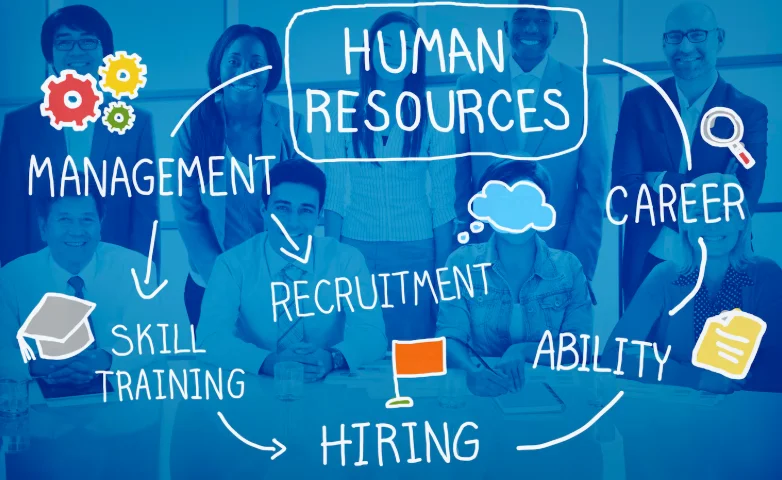

An organized learning experience provided within a limited time period to improve job performance & growth is referred to as Human Resource Development (HRD). Training is a component of human resource development in which special programs are designed to provide specific employees with knowledge & skills that are helpful for their present jobs.
Why Human Resource Development Activities are Important
Human Resource Development (HRD) activities help organizations improve employee knowledge, skills, competencies, and overall performance. Through structured learning opportunities such as training, coaching, mentoring, and career development programs, organizations prepare employees to meet current job requirements while developing future leadership capabilities.
Well-designed HRD activities also improve employee engagement, increase productivity, strengthen organizational competitiveness, and support continuous learning. As organizations adapt to technological advancements and changing business environments, Human Resource Development has become an essential strategic function of modern Human Resource Management.
Major Human Resource Development Activities
| HRD Activity | Primary Purpose |
|---|---|
| Employee Training | Improve job-related skills |
| Coaching | Enhance individual performance |
| Mentoring | Support career growth |
| Job Rotation | Develop broader experience |
| Leadership Development | Prepare future managers |
| Career Development | Support long-term professional growth |
The following activities are included in the area of human resource development:
-
Training & Development
-
Organizational Development
-
Career Development
Training & Development
Training is related to the provision of certain skills & knowledge that help trainees overcome deficiencies in job performance. On the other hand, development is related to providing skills to employees so that the organization can utilize them in the future.
Organizational Development
It is the application of behavioral science knowledge in an organization so that strategies, processes & structures are improved through proper development & reinforcement.
Career Development
Career development is defined as organizational assistance provided to employees for acquiring the required knowledge & skills to perform their current job as well as future jobs effectively.
Organizations develop certain policies for employees such as promotion opportunities, future performance excellence, and counseling so that employees can develop their careers. It includes knowledge, skills, experience, reinforcement & behavior modification techniques that enable employees to perform better and add value.
Training vs Development
| Training | Development |
|---|---|
| Focuses on current job performance | Focuses on future career growth |
| Short-term learning | Long-term learning |
| Improves immediate skills | Develops leadership and competencies |
| Job-oriented | Career-oriented |
Human Resource Programs
Human resource programs are classified into the following three types:
-
Training
-
Education
-
Development
Training
Employees receive training so they become capable of performing the duties of their current job effectively.
Education
Employees who are considered potential & efficient enough for promotion are given education. Education prepares employees for different jobs either at a higher level of hierarchy or at a lateral level.
Development
To provide new viewpoints, technologies, and broader horizons, development programs are conducted to make employees proactive and capable of meeting expected organizational performance standards.
HRD Methods and Their Organizational Benefits
| HRD Method | Organizational Benefit |
|---|---|
| Training Programs | Improved employee performance |
| Coaching | Better individual productivity |
| Mentoring | Leadership development |
| Job Rotation | Increased employee flexibility |
| Workshops | Updated knowledge and skills |
| E-learning | Continuous learning opportunities |
Employee abilities can be developed through both on-the-job and off-the-job methods. The details of these methods are as follows:
Job Rotation
In this method, efforts are made to increase employees’ knowledge, skills & abilities by moving them to different positions. Employees can be rotated both vertically & horizontally. Vertical rotation is also called promotion.
Assistant-to Position
Sometimes an efficient employee works under the supervision of a successful manager from another area. In this way, the employee’s abilities & skills are groomed under proper guidance so they can be prepared for higher-level duties.
Committee Assignment
Employees gain development opportunities through committee assignments by participating in decision-making, identifying organizational problems, and observing others.
Lectures & Seminars
This is a traditional method in which lectures & seminars are arranged to help employees gain knowledge and develop analytical & conceptual abilities.
Simulations
Simulators are complex devices that create artificial situations similar to real ones. By creating duplicates of real situations, employees are trained to perform tasks practically.
Outdoor Training
Outdoor training is considered one of the most effective HRD methods. Trainees are trained to work together as a team. The main aim is to understand employee responses when they face natural challenges.
Preparation of Succession Plan Program
Succession plans include details of job positions currently open in the organization and positions that may open in the future, along with methods for filling them.
If management decides to fill positions internally, training & development programs are required to prepare employees for promotion.
If management decides to hire externally, careful labor market analysis is needed to find qualified & suitable replacements.
Role of Line Managers in Human Resource Development
Line managers perform the following roles in HR development:
• Provide orientation training to new employees
• Assess training needs & plan developmental strategies
• Are responsible for on-the-job training
• Ensure proper transfer of training to trainees
Role of HR Department in Human Resource Development
The HR department is directly involved in HR development by performing the following roles:
• Providing employee orientation training
• Supporting the preparation of management development programs
• Providing proper training & development to employees in need
• Evaluating training programs to measure their effectiveness
Practical Example of Human Resource Development Activities
Suppose a healthcare organization introduces a new electronic medical records system.
Before implementation, the HR department organizes technical training sessions, assigns experienced employees as mentors, and provides online learning resources for all staff. Supervisors also conduct follow-up coaching sessions to address employee questions and monitor progress.
As employees become more confident using the new system, productivity improves, operational errors decrease, and patient services become more efficient.
This example demonstrates how different HRD activities work together to improve employee performance and organizational effectiveness.
Benefits and Challenges of Human Resource Development
| Benefits | Challenges |
|---|---|
| Improves employee skills | Training costs |
| Increases productivity | Time constraints |
| Supports career development | Resistance to change |
| Develops future leaders | Measuring training effectiveness |
| Enhances organizational competitiveness | Rapid technological change |
Frequently Asked Questions (FAQs)
What are Human Resource Development activities?
Human Resource Development activities are organized programs designed to improve employee knowledge, skills, competencies, and career growth through training, coaching, mentoring, and other learning initiatives.
Why are HRD activities important?
They improve employee performance, support career development, strengthen organizational competitiveness, and prepare employees for future responsibilities.
What are the common methods of Human Resource Development?
Common methods include employee training, coaching, mentoring, job rotation, leadership development, workshops, seminars, and e-learning.
What is the difference between training and development?
Training focuses on improving current job performance, while development prepares employees for future roles and long-term career growth.
How can organizations improve Human Resource Development programs?
Organizations can conduct training needs assessments, align HRD activities with business goals, evaluate learning outcomes, encourage continuous learning, and provide ongoing coaching and mentoring.
Conclusion
Organizations can improve the effectiveness of Human Resource Development by conducting regular training needs assessments, aligning development activities with organizational goals, encouraging continuous learning, evaluating training outcomes, and providing employees with opportunities for career advancement.
Managers should also support employee development through coaching, mentoring, constructive feedback, and recognition of learning achievements.